Bowls and Pringles お椀とプリングルス
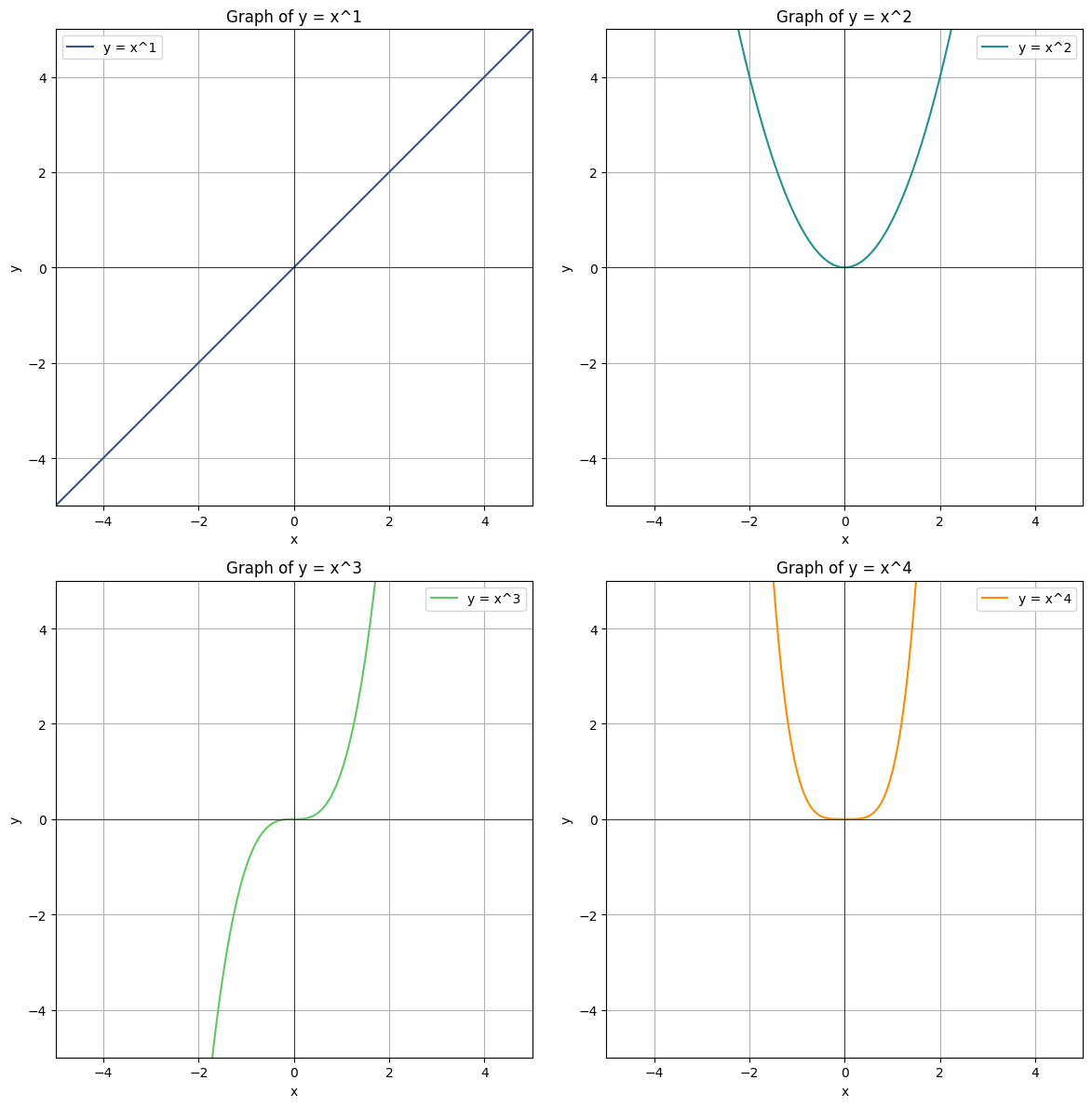
In junior high, we learn about different shapes from basic equations like and how changing the exponent affects the graph. If plugging in a negative gives the exact same result as the original (meaning the graph is symmetric about the y-axis), it is called an even function. If it is symmetric about the origin, it is called an odd function.
中学校では、 のような基本的な方程式が作るさまざまな形を学び、指数を変えるとグラフがどう変わるかを習います。負の を入れても元の とまったく同じ値になる関数(つまりグラフが y 軸に対して対称)は偶関数と呼び、原点に対して対称なら奇関数と呼びます。
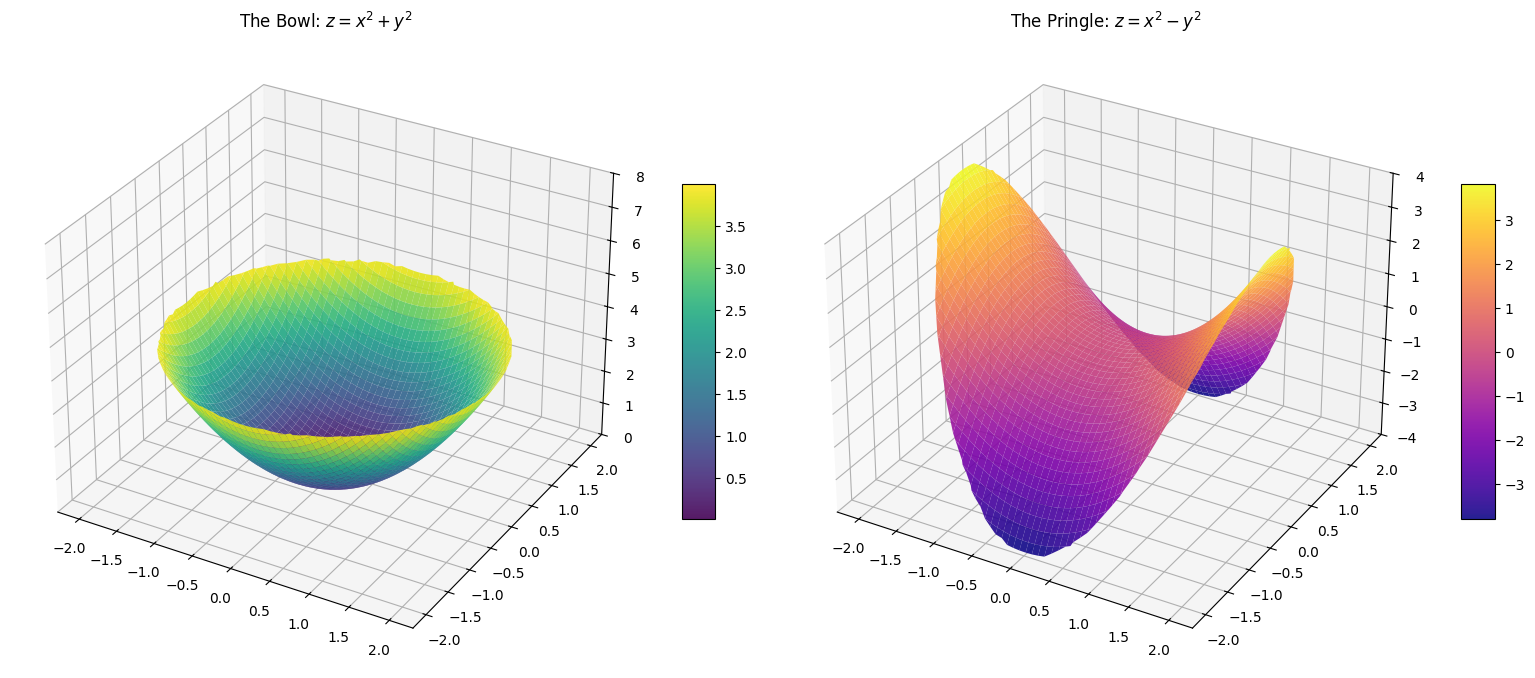
This concept can be extended to higher dimensions. For example, below are graphs of and . As we add dimensions, we have more freedom in how we combine terms with addition and subtraction. makes a bowl-like shape, which is basically a rotated parabola. looks like a saddle, or a Pringles chip. You can still see parabolas here, but they’re combined in opposite directions.
この考え方は高次元にも拡張できます。たとえば、下の図は と のグラフです。次元が増えるほど、足し算と引き算で項を組み合わせる自由度が高まります。 は放物線を回転したようなお椀型になり、 は馬の鞍やプリングルスのような形に見えます。どちらも放物線の形が見えますが、異なる向きで組み合わされています。
These shapes extend indefinitely, but we trim them to circles in the top view to make them easier to see. Mathematically they are called elliptic paraboloid and hyperbolic paraboloid.
これらの形は無限に続きますが、見やすくするために上から見たときに円形になるように切り取っています。数学的には、これらはそれぞれ楕円放物面と双曲放物面と呼ばれます。
Increasing the exponent, we can draw different shapes.
指数を増やしていくと様々な形が描けます。
Can you imagine this in higher dimensions? If you add one more dimension, you get a 3D shape with volume in 4D space. We cannot fully visualize it, but can you draw a slice of it? What if we map a gradient of colors to the fourth dimension?
より高次元で同じことを考えられるでしょうか。 もう 1 次元増やすと、4 次元空間の中に 3 次元の体積を持った形ができます。これはもう完全には可視化できませんが、その断面(スライス)を描くことはできるでしょうか。 4つ目の次元にグラデーションで色を割り当てたらどうでしょう。