Codifying human (2)
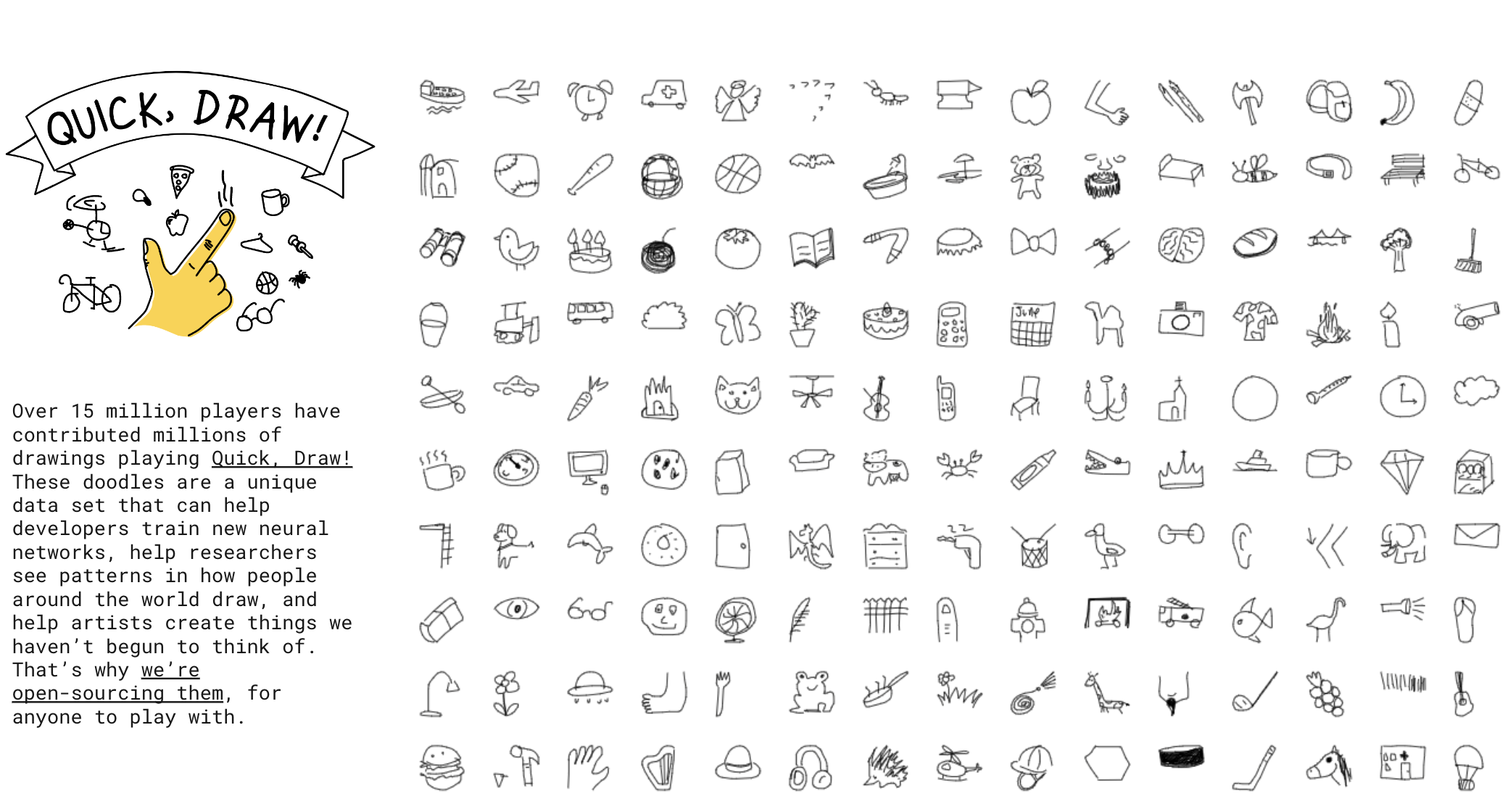
AI全盛の昨今(2022年現在)、先にアルゴリズムを考えるのではなく、実際に描いた線をデータにして分析する手法にも興味がある。上の画像はGoogleのQuick, Draw!。色々な人がブラウザ上で落書きしたデータが、オープンソースで1500万人分以上集まっている。
In the age of AI(as of 2022), I’m also interested in using datasets of actual hand-drawings instead of coming up with algorithms from scratch. The image above is from Google’s “Quick, Draw!” where people can draw various things on their browser. The data collected from over 15 million people has been made open source.
このデータを元に、異なる絵の間の似た線どうしを繋いで永遠に絵を描き続けるようにしたもの。ランダムなようで中に具象的なものや記号的なものが現れてくるのが面白い。
This is an experiment that continues drawing indefinitely by connecting similar lines between different pictures. It’s interesting to see concrete motifs and symbolic elements appear within this seemingly random chaos.
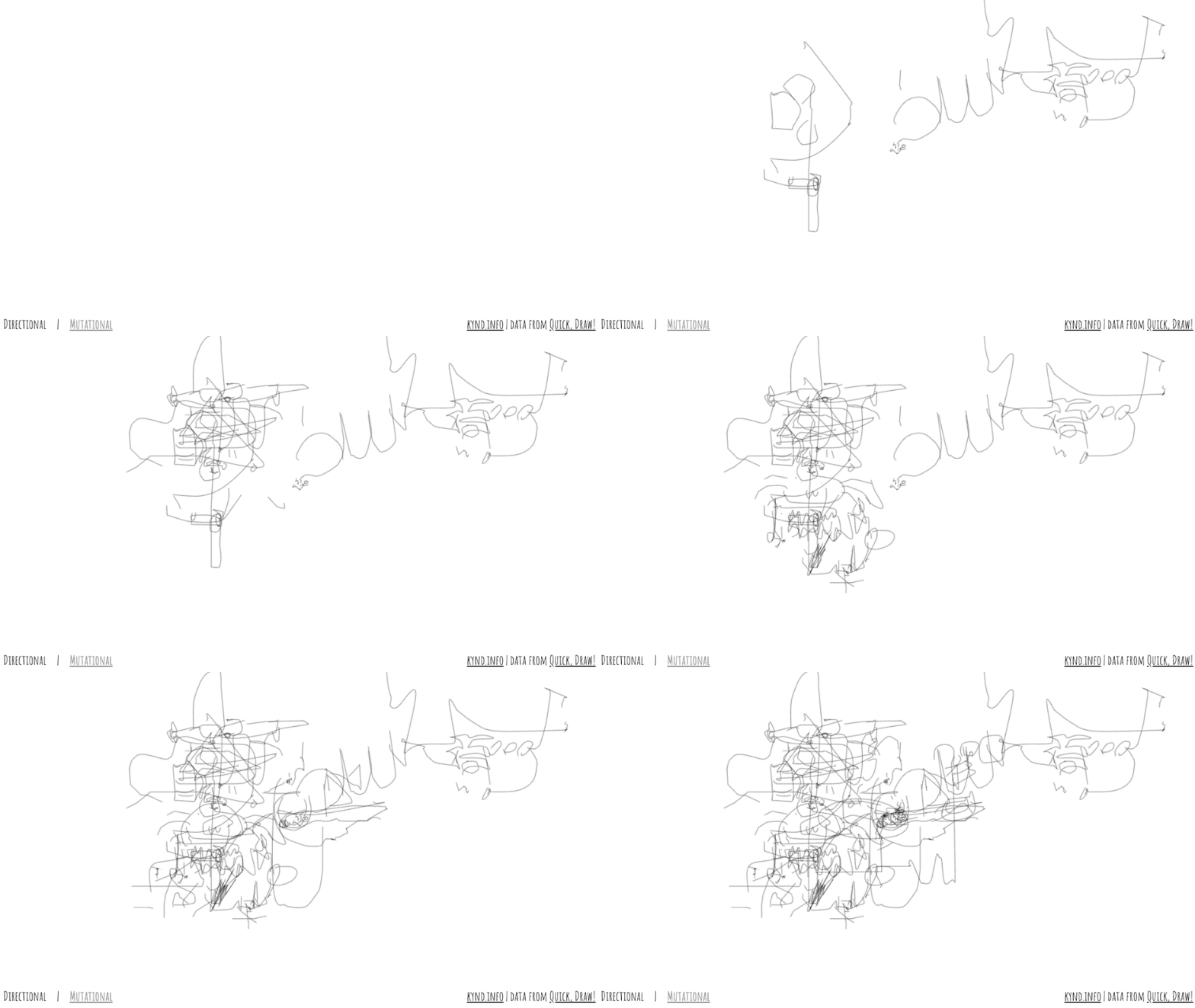
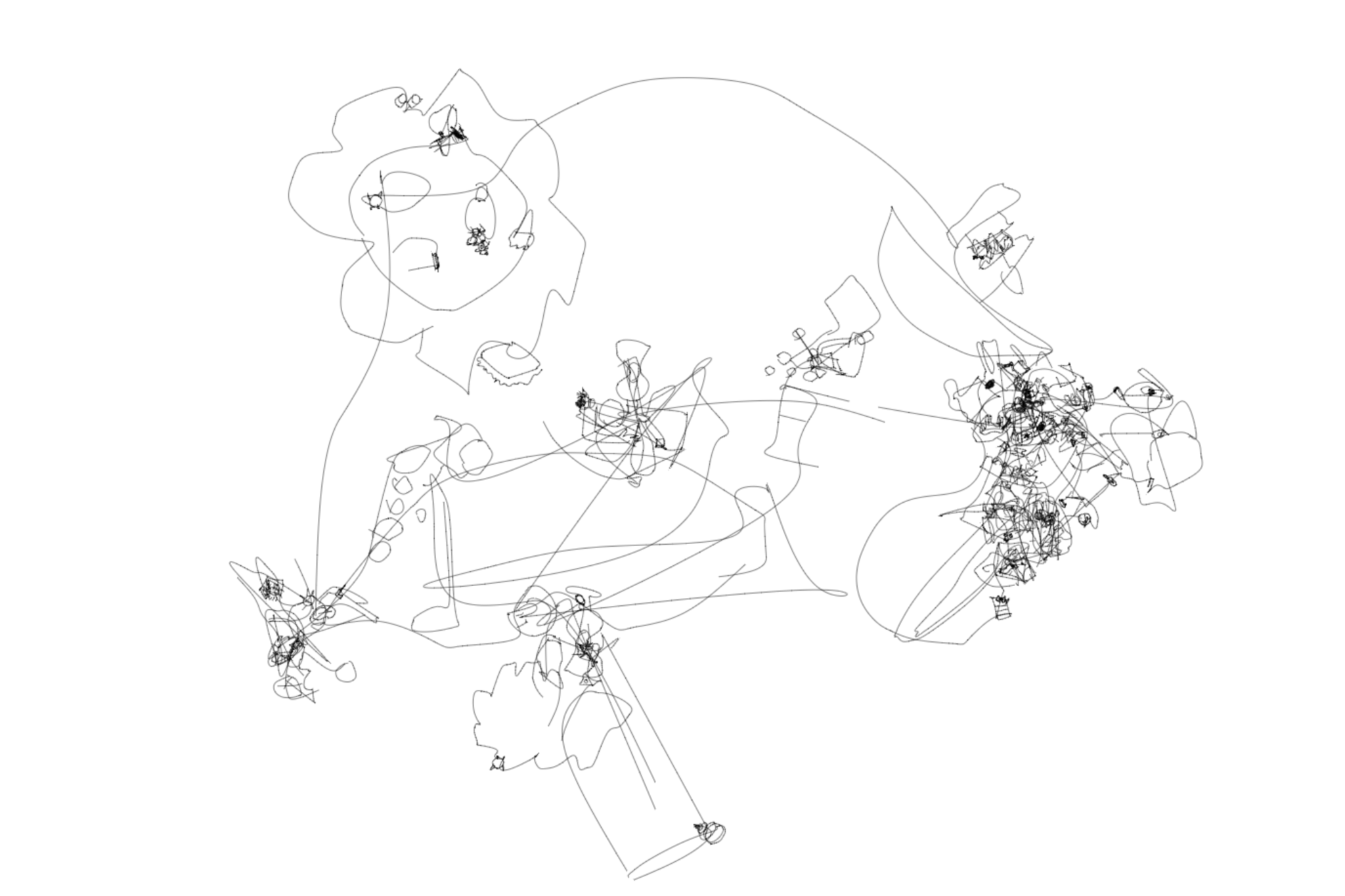
落書きのフラクタル。Fractal of doodling
下はStable Diffusionで作ったビデオ。絵を描く過程に興味があるので、いきなり結果だけが出てもあまり面白くない(仕事ではガンガン使う)。絵を描くプロセスの中のどの部分を取り出すか、どこにらしさが潜んでいるのかといった点を考えると楽しい。
Here are a couple of videos made with Stable Diffusion. Since I’m interested in the process of drawing, it’s not as fun to just see the final result (although I use it a lot for work). It’s more inspiring to think about which part of the drawing process to extract and where the painting-ness lies.
これを書いたのは2022年だが、数年経っても同じように感じる。作る過程自体が楽しいので手を動かすことに苦がないし楽しいまま。今振り返ると、この時代の夢がバグった感じの方が、最近のAIの単純に完成度が高い感じよりも想像を掻き立てられて面白い気がする。何がお金になるかは別の話。
I wrote this in 2022. After several years, I still feel the same way. The process of making things is fun by itself and remains fun. Working with my hands doesn’t bother me at all. Looking back now, I find that the glitchy, buggy dreams from that era were more intriguing than today’s AI with its mere polish. The money matter is a different story.